
Home › Coon Rapids, MN
Coon Rapids carries a reputation in this metro that the numbers do not support. Here is the honest version — what is genuinely good, what the price gap really means, and the one group of buyers I would point somewhere else.
I am not going to pretend the reputation does not exist. People in the north metro have opinions about Coon Rapids, most of them formed a long time ago and rarely revisited. So rather than argue about it, here is what buyers actually did last month.
Homes in Coon Rapids are selling faster than homes in Blaine and faster than the metro average. Whatever people say at the coffee shop, buyers are not hesitating.
One honest caveat in the other direction: that 21 days is up 31.3% from a year ago, while Blaine's 25 is down 3.8%. So Coon Rapids slowed over the year and Blaine sped up slightly. In absolute terms Coon Rapids is still the faster market. Both things are true.
This is the part almost every comparison gets wrong, and it matters if you are choosing between the two cities.
An $81,000 gap. Roughly 20% cheaper. That is the number that ends up in every “Blaine vs. Coon Rapids” article on the internet, and taken alone it is misleading.
Now the same two cities measured per square foot:
Per square foot, Coon Rapids is about 7% cheaper than Blaine, not 20%. The other thirteen points are not a discount. They are a smaller house.
That is what the median is really telling you. Coon Rapids was largely built before the north metro started putting up 2,400 square foot two-stories, so the typical home that trades there is older and smaller than the typical home that trades in Blaine. Compare the medians and you are not comparing the same product.
Which cuts both ways, and I want to be straight about it. If you want 2,400 finished square feet on a newer build, Coon Rapids will not save you 20% — it will save you something closer to 7%, and you will have a harder time finding the house. But if what you actually need is a solid 1,400 to 1,800 square foot home on a real lot, Coon Rapids is one of the best values in the north metro, and the entry price is genuinely lower.
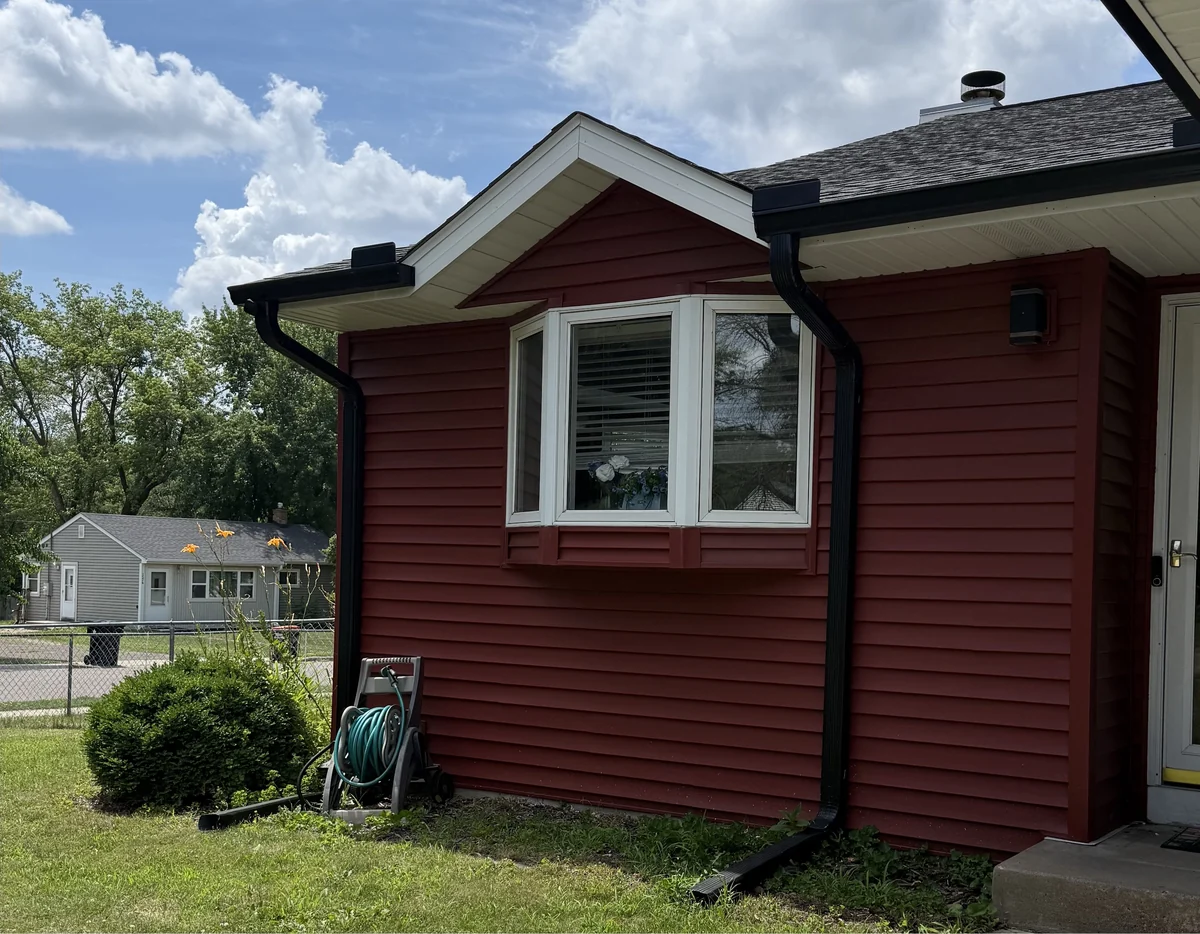
Do not read too much into one month. That 8.9% median drop looks alarming until you notice price per square foot fell only 5.1% and homes still sold in 21 days. A market that was actually weakening would be slower, not faster. City-level medians move on what happened to sell that month, and Coon Rapids closes a small enough number of homes that a few large sales either way swings the figure. Watch price per square foot and days on market instead.
Figures are the Minneapolis Area Realtors local market update for August 2026, the most recent published at the time of writing. They are revised and they move month to month — ask me for the current ones rather than relying on a page.
Every suburb claims parks. Coon Rapids has an unusual amount of genuine outdoors for a city of 23.5 square miles, and it is the single most undersold thing about living here.
The Mississippi is the part people forget. Coon Rapids has real river frontage and two regional parks sitting on it, which is not something Blaine, Andover or Ham Lake can offer at any price.

If your weekends involve a bike, a dog, a kayak or a pair of running shoes, this city gives you more for the money than anywhere else in the north metro. That is not a consolation prize for the lower price. It is the reason to be here.
Anoka-Hennepin School District 11 serves all of Coon Rapids. The entire city, one district, no boundary puzzle.
That sounds mundane until you have shopped in Blaine, where three districts split a single city and the lines do not follow the logic newcomers expect. I have watched buyers fall for a house and then find out it feeds somewhere they did not intend. In Coon Rapids that particular problem does not exist.
I will be honest about the trade. Anoka-Hennepin does not carry the reputation that Mounds View District 621 does — if a top-ranked district is the thing you are buying, that is a real consideration and you should look at Mounds View instead. But Anoka-Hennepin is a strong district, it is the largest in the state, and the gap between “strong” and “top ten” is a lot smaller than the price difference between the two cities.
Verify the assigned schools for a specific address before you write an offer. District boundaries and individual school assignments change. Check with the district directly rather than relying on a listing sheet.
This is the fair part of the reputation. Coon Rapids is an established city, built out well before the newer northern suburbs, and there is very little new construction happening inside it. If you want a builder, a lot and a punch list, you are looking at Blaine, Andover, Ham Lake or further out.
What you get instead is mature. Real trees, finished neighbourhoods, lots that were platted when land was cheaper, and a housing stock that has already shown you how it ages. You also get inspection items, because a 1978 house has a 1978 house's list.
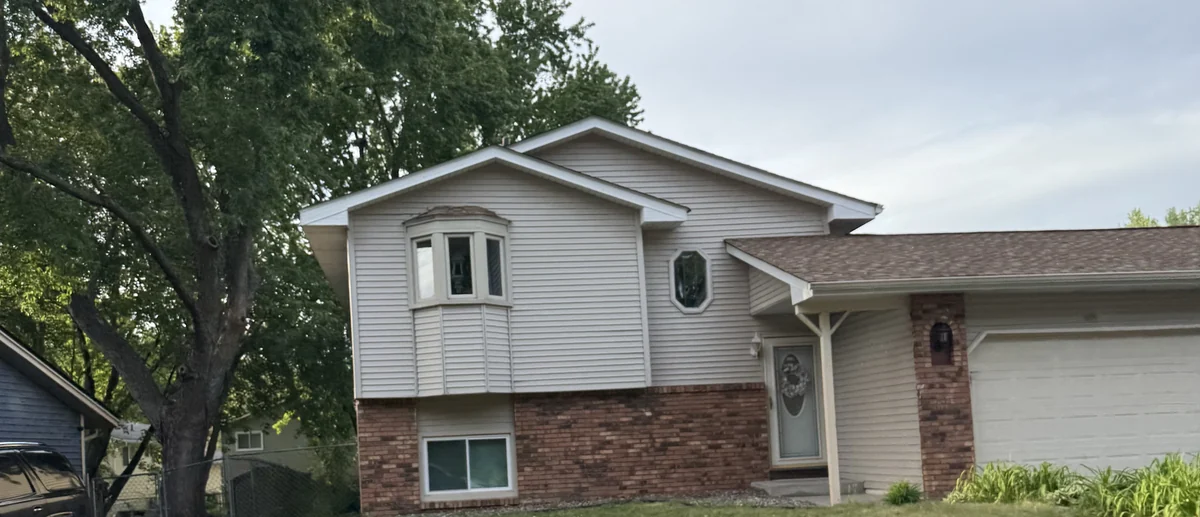
The right way to shop an established city is to budget for the mechanicals and negotiate on what you find, rather than screening houses out by age. Some of the best values I see are homes that show badly and inspect well.
This is where I would steer some buyers elsewhere, and I would rather say so than sell you a house you resent on a Tuesday morning.
Coon Rapids runs on U.S. 10, with Highway 610 connecting east to I-94 and Highway 47 and 252 carrying the rest. Those are real roads and they work. But the options are fewer than they look on a map, and they funnel. When one backs up, you do not have many alternatives.
There is no good diagonal from Coon Rapids to St. Paul. You are stitching together routes, and it shows up every single day. If you or your spouse commute to St. Paul, I would genuinely look at Blaine or further east first.
610 to I-94 gets you downtown, and Metro Transit's Route 850 runs express. It is a fine commute on a normal day. The issue is redundancy: from Blaine, near Radisson, you have 35W and Highway 65 and can pick. From Coon Rapids you have fewer ways to react when something goes wrong.
The Northstar commuter rail ran its last train on January 4, 2026, and the Coon Rapids–Riverdale station is closed. Metro Transit replaced roughly 40 weekly train trips with nearly 400 weekly bus trips, running as often as every 30 minutes at rush hour. More frequent, but a bus in traffic rather than a train beside it. A lot of pages about this city still list the Northstar as an amenity. It is not one any more.
None of this makes Coon Rapids a bad place to live. It makes it a better fit for people who work from home, work locally, or commute north and west — and a worse fit for a daily St. Paul run. Be honest with yourself about which one you are before you shop.
You want the most house and the most outdoors per dollar in the north metro, you do not need new construction, and your commute is local, northbound, or nonexistent.
You commute to St. Paul daily, you specifically want a newer or larger home, or a top-ranked school district is the thing you are actually buying.
The reputation is mostly stale. The commute is the part that is genuinely worth weighing.
If you are weighing Coon Rapids against Blaine or Mounds View, send me the two houses you are torn between and I will tell you what the price difference is actually buying you. If you are moving up and out, the harder question is how to time the sale against the purchase.
See how the Southpaw Protocol works